Why life science labs are moving from markers to markerless motion capture
Markerless capture does not abandon rigorous measurement. It reduces preparation burden when the research question allows more natural repeated motion data.
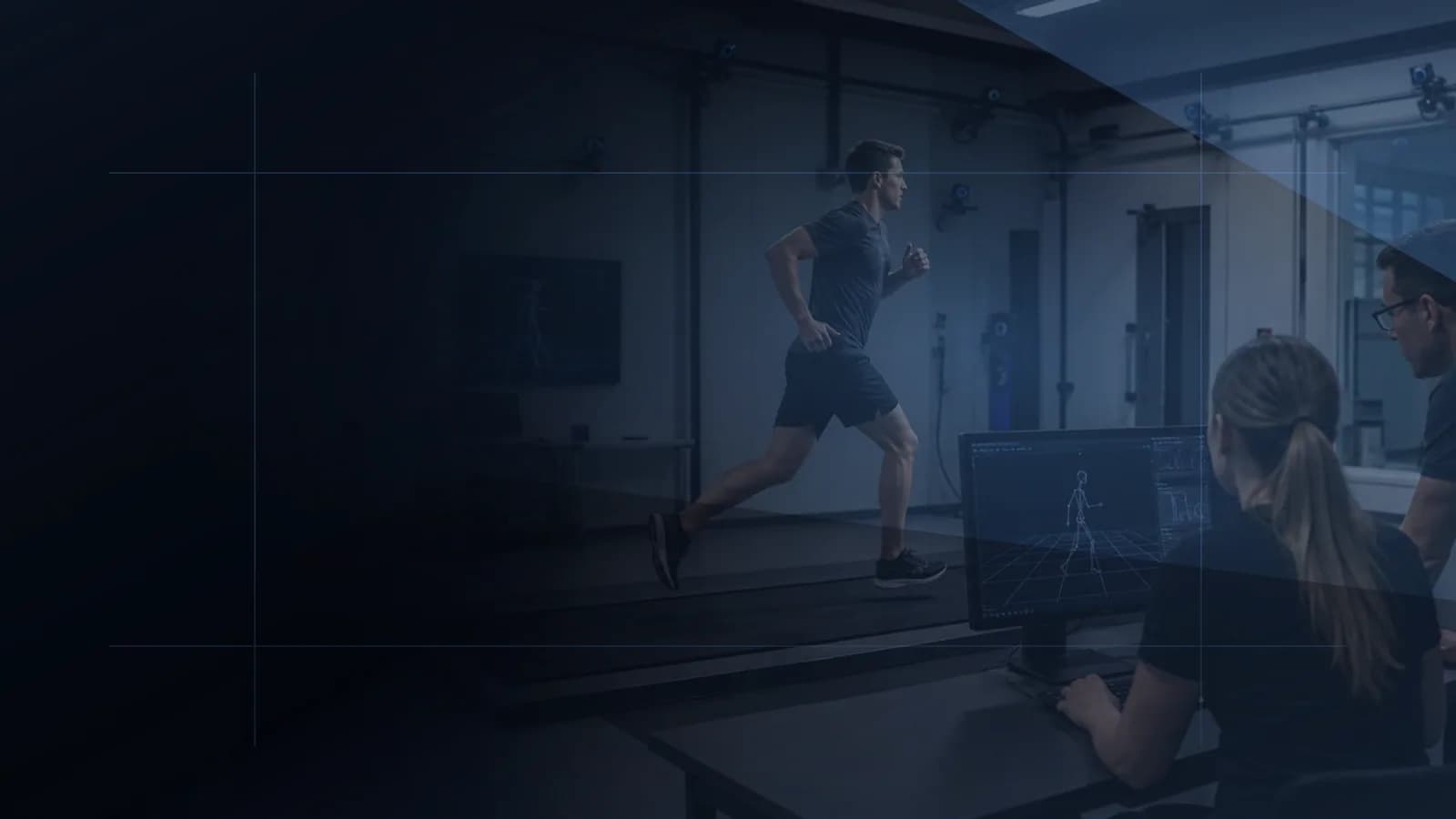
Marker-based capture remains important
Optical marker systems have deep history in gait, biomechanics and sport science. They remain valuable for mature protocols, anatomical landmarks and continuity with historical datasets. The cost is preparation time, operator variability, soft-tissue artifact and lower throughput.
Markerless returns resources to the question
Without full-body marker placement or inertial nodes, researchers can spend more effort on participant screening, task design, device synchronization, repeated trials and anomaly notes. This is especially meaningful for longitudinal and natural-task studies.
Seeing a person is not the same as measuring an indicator
Pose algorithms locate image-defined keypoints. Research indicators may require joint centers, segment coordinate systems, rotation sequences and filtering choices. Labs should define which metrics are exploratory, comparable or require cross-validation.
Real evidence is multimodal
Motion capture describes kinematics. Force plates, EMG, pressure, physiology and biomechanical models may be required to explain load and cause. The challenge is to align these signals on one time axis, one coordinate definition and one set of task events.
Semcam Live as lab infrastructure
Semcam Live combines synchronized multi-view capture, edge AI, real-time quality control and optional HPE processing. Active Center supports local project management and data directions such as OpenSim, Visual3D, C3D, MATLAB and Python, helping markerless data enter existing analysis workflows.